
Why Is My Electric Bill So High All of a Sudden? 8 Common Causes
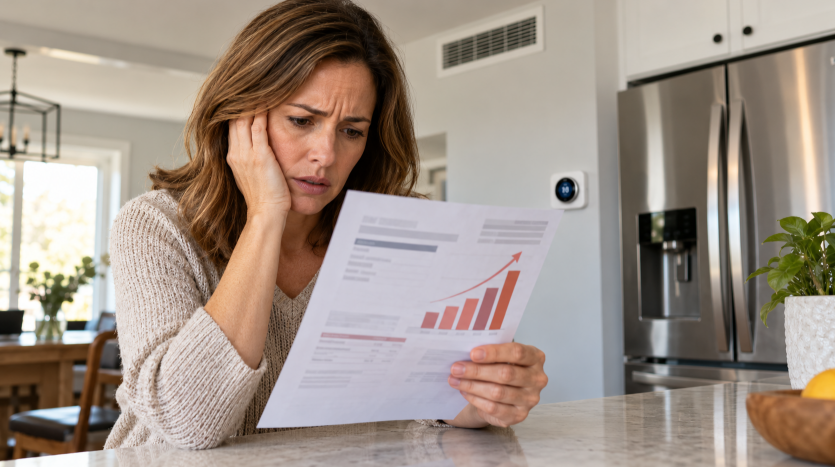
A sudden jump in your electric bill comes down to two things: you used more electricity, or each kilowatt-hour (kWh) cost you more. Most spikes trace back to one of those, and often to both at once.
Prices are part of the story right now. The U.S. Energy Information Administration (EIA) expects the average residential price to reach about 18.2 cents per kWh in 2026, with the biggest increases along the East Coast. One analysis of EIA data found residential rates rose about 7% between April 2025 and April 2026.
You can't control the price per kWh, but you can control how many kWh you use. Below are the 8 most common causes of a surprise bill, how to recognize each one, and what to do about it.
Quick answer: the 8 usual suspects
- Your utility raised its rates
- Heating or cooling is working harder than before
- Weather swings or changes at home
- Standby power from devices that are always plugged in
- A water heater that is aging or running too hot
- An old or poorly maintained appliance
- Air leaks and weak insulation
- An estimated meter reading or a billing error
1. Your utility raised its rates
If your kWh usage is about the same as last year but the total is higher, the price went up. Check the "price per kWh" or the charges breakdown on your bill. Delivery fees, fuel adjustments and seasonal rate tiers can all change without much notice.
What to do: Log in to your utility's website and look for alternative rate plans, such as time-of-use pricing, where electricity costs less at off-peak hours. Ask about budget billing, which spreads your yearly cost into even monthly payments.
2. Heating and cooling are working harder
Heating and cooling are usually the largest energy use in a home. The EIA estimates they account for roughly half of annual home energy consumption, so a small problem here shows up fast on the bill. A clogged filter, blocked vents, low refrigerant or an aging system forces the equipment to run longer to reach the same temperature.
What to do:
- Check your air filter and replace it on the schedule in your system's manual. Many homes need a new one every one to three months.
- Keep vents and returns clear of furniture and rugs.
- Book a yearly tune-up before peak season.
- Adjust the thermostat when you're asleep or away. The U.S. Department of Energy (DOE) estimates about 1% savings per degree for each 8 hours of adjustment, and up to 10% a year from turning it back 7 to 10 degrees for 8 hours a day.
3. Weather swings or changes at home
A heat wave, a cold snap or a longer-than-usual billing period can push usage up even when your habits haven't changed. So can changes inside the house: someone working from home, guests staying over, kids home on break, or a new space heater, dehumidifier, pool pump or EV charger.
What to do: Compare the same month last year in kWh, not dollars. Many utilities show a daily usage graph in your online account. Look for the days where the line jumps, then ask what changed that day.
4. Standby power from always-plugged-in devices
TVs, game consoles, cable boxes, computers, chargers and microwaves with clocks keep drawing power when they look "off." The DOE says standby power makes up 5% to 10% of residential energy use, and one estimate puts the cost at up to $183 a year for the average U.S. household.
What to do:
- Plug entertainment centers and home-office gear into a power strip you can switch off, or a smart power strip that cuts power to idle devices.
- Unplug chargers and small appliances you rarely use.
- Turn on the energy-saving mode on TVs and game consoles.
5. A water heater that is aging or running too hot
If your water heater is electric, it is one of the bigger year-round electricity users in the house. Sediment buildup, a high temperature setting, a dripping hot tap or a unit near the end of its life can all make it run more than it should.
What to do:
- Check the temperature setting. Around 120°F is a common recommendation, but follow your unit's manual.
- Fix any dripping hot-water faucet. A slow drip means the heater keeps reheating.
- Flush the tank on the schedule the manufacturer recommends.
- If the tank is more than about 10 years old and the bill keeps climbing, ask a licensed plumber whether replacement makes sense.
6. An old or poorly maintained appliance
A refrigerator, a second freezer in the garage, a dryer or a window AC unit can slowly lose efficiency and then show up as a bill jump. Warning signs include a compressor that rarely shuts off, frost buildup, a warm back panel, or a dryer that takes more than one cycle to dry a load.
What to do:
- Clean the refrigerator's condenser coils and check the door seals. Our guide to 9 refrigerator mistakes that waste energy walks through each check.
- Clean the dryer's lint trap and vent hose.
- Unplug that spare freezer or old second fridge if you don't truly need it.
- For other common upkeep slips, see 7 home maintenance mistakes that could lead to costly repairs.
7. Air leaks and weak insulation
When warm or cool air slips out through gaps around doors, windows, the attic hatch and exterior outlets, your heating and cooling system has to run longer to make up the difference. You might not notice it until the weather turns extreme.
What to do:
- Seal gaps with caulk or weatherstripping, and add door sweeps.
- Check how much insulation you have in the attic.
- Ask your utility about an energy audit. Many utilities offer free or low-cost audits that include spotting hidden power drains.
8. An estimated meter reading or a billing error
Some utilities estimate your usage when they can't read the meter. If the estimate runs low for a few months, a later actual reading can bring a catch-up charge that looks like a sudden jump. Billing periods that run longer than usual, a wrong rate plan or a one-time fee can do the same.
What to do:
- Look for the words "estimated" or "actual" next to the meter reading on your bill.
- Count the days in the billing period and compare it to previous months.
- Read your own meter and compare it to the bill.
- Call the utility and ask them to review the account. If you still suspect a fault, ask whether they can test the meter.
How to find your own cause in 20 minutes
Your bill is kWh used multiplied by the price per kWh, plus fixed fees. Separate those two numbers first and the cause usually narrows down fast.
- Compare kWh, not dollars. Put this month's kWh next to the same month last year. If kWh is flat, the price or a fee changed (cause 1 or 8).
- Check the billing period. Count the days. A 35-day bill will cost more than a 28-day one.
- Look for "estimated" next to the meter reading. If you see it, call the utility (cause 8).
- Open the daily usage graph in your online account and find the days where usage jumped.
- Match the jump to a change. A heat wave, a guest, a new heater or a broken appliance often lines up with it (causes 2, 3, 5 and 6).
- Measure suspect devices. A plug-in watt meter shows what a fridge, freezer or entertainment center really draws (causes 4 and 6).
What a bill change looks like in numbers
The average U.S. household uses about 10,791 kWh a year, or roughly 900 kWh a month. The table below uses that figure with an 18-cent price. It is an illustration, not your bill.
| Scenario | Monthly usage (kWh) | Price (per kWh) | Approx. bill |
|---|---|---|---|
| Baseline | 900 | $0.180 | $162 |
| Rate up 7% | 900 | $0.193 | $174 |
| Usage up 200 kWh | 1,100 | $0.180 | $198 |
| Both together | 1,100 | $0.193 | $212 |
A rate increase alone adds about $12 in this example. A jump in usage adds more, and usage is the part you can act on.
Frequently asked questions
Why is my electric bill so high when I'm barely home?
Some loads run no matter who is home: the refrigerator, the water heater, standby devices and your heating or cooling system. If you're away and the bill is still high, start with causes 4, 5 and 6.
Can a faulty meter cause a high bill?
It's uncommon, but it can happen. Rule out the easier causes first, then ask your utility to review your account and test the meter.
How much of my bill is standby power?
The DOE puts standby power at roughly 5% to 10% of residential energy use. Your share depends on how many devices you keep plugged in.
Will a smart thermostat lower my bill?
ENERGY STAR certified smart thermostats save about 8% on heating and cooling costs on average, about $50 a year. Results vary with your climate, home and habits.
When should I call a professional?
Call a licensed electrician or HVAC technician if you notice a burning smell, flickering lights, breakers that trip repeatedly, or a heating or cooling system that runs constantly without reaching the set temperature. Don't open electrical panels or attempt wiring repairs yourself.
The bottom line
Start with two numbers on your bill: kWh used and price per kWh. If the price rose, shop rate plans and shift usage to cheaper hours. If usage rose, check heating and cooling, the water heater and standby devices first, since they account for much of a typical home's energy use. For more ideas, read our guide on how to lower your electricity bill with 9 practical steps.
This article is general information. Savings and costs vary by home, climate and utility, and it isn't a substitute for advice from a licensed professional.
Sources
- EIA Short-Term Energy Outlook: electricity, coal and renewables
- Newsweek: electricity prices by state, citing EIA data
- EnergySage: phantom loads overview
- Scientific American: vampires in your house
- Fairfax County: two-degree challenge, citing EIA and DOE
- Direct Energy: savings from adjusting your thermostat, citing DOE
- Consumer Reports: reducing cooling bills
Leave a Reply