
7 Signs Your Home May Need Better Insulation (And What to Check First)
Does one room feel freezing while another stays warm? Are your heating and cooling bills higher than expected? These problems may point to inadequate insulation, unwanted air leaks, or other issues affecting your home's efficiency. Here are seven warning signs worth investigating before spending money on insulation upgrades.
1. Some Rooms Feel Much Hotter or Colder Than Others
A comfortable home should maintain reasonably consistent temperatures, although sunlight, room location, and HVAC design can create natural differences.
If one bedroom stays unusually cold in winter while the rest of the house feels comfortable, insufficient insulation or air leakage could be contributing to the problem.
ENERGY STAR identifies uneven room temperatures as a common sign that a home may benefit from air sealing or additional insulation.
Signs Worth Checking
- Upstairs rooms become excessively warm in summer.
- Rooms near exterior walls feel unusually cold.
- Temperatures change noticeably between neighboring rooms.
What You Can Do
Compare room temperatures using a reliable indoor thermometer.
Check whether heating and cooling vents are open and unobstructed. Look for noticeable drafts around accessible windows and doors.
If the differences continue, consider a professional home energy assessment to identify whether insulation, ductwork, or HVAC performance is responsible.
Key Takeaway: Uneven temperatures can indicate insulation problems, but other causes should be ruled out before investing in upgrades.
2. Your Heating and Cooling Bills Keep Increasing
An unexpected increase in utility expenses can make homeowners wonder whether their insulation is still doing its job.
When a home loses heat during winter or gains excessive heat during summer, heating and cooling systems may need to operate longer to maintain comfortable temperatures.
Insulation and air sealing can help reduce unwanted heat transfer.
However, rising bills do not automatically mean you need more insulation.
What to Check
- Energy consumption compared with similar months in previous years.
- Changes in electricity or natural gas rates.
- Recent extreme weather.
- Heating and cooling equipment maintenance.
- Household occupancy and thermostat settings.
What You Can Do
Review several utility bills and compare actual energy consumption, not just dollar amounts.
Look for patterns during unusually hot or cold months.
ENERGY STAR notes that sealing air leaks and improving insulation can reduce heating and cooling expenses, although savings depend on the property.
Key Takeaway: Higher bills are a reason to investigate home efficiency, not proof that insulation alone is the problem.
3. You Notice Cold Drafts Near Walls and Floors
A noticeable draft can make an otherwise comfortable room feel colder.
These drafts may occur around exterior doors, windows, baseboards, attic access openings, or other gaps in the building envelope.
Although insulation helps resist heat transfer, it does not necessarily stop air movement through unsealed gaps.
That is why ENERGY STAR recommends considering air sealing alongside insulation improvements.
Signs Worth Checking
- Cold air near baseboards.
- Drafts around closed windows.
- Air movement near attic access panels.
- Uncomfortable floors above unconditioned spaces.
What You Can Do
Inspect accessible door and window weatherstripping for visible damage.
Check whether attic access panels close properly.
Avoid blocking intentional ventilation openings, appliance vents, or other components requiring airflow.
A qualified home energy professional can use diagnostic equipment to identify hidden air leaks.
Key Takeaway: Drafts often indicate an air-sealing problem, which may need attention before adding insulation.
4. Your Attic Insulation Looks Thin or Uneven
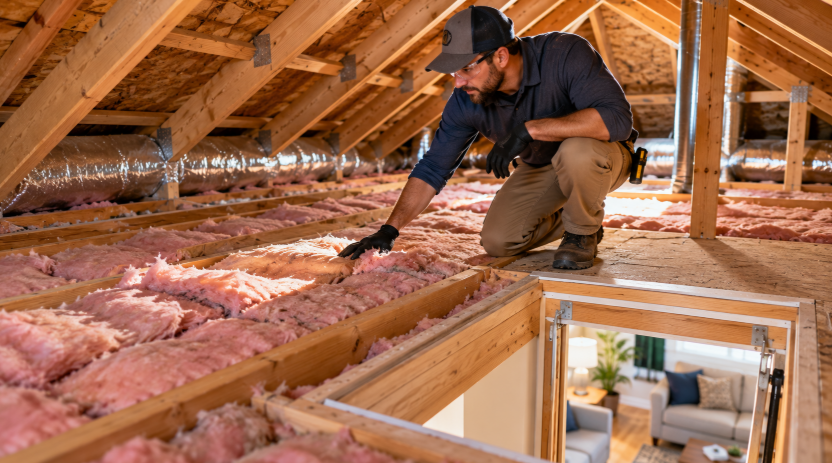
Your attic can be an important place to investigate home energy performance.
Insulation helps reduce heat transfer between conditioned living spaces and the attic.
However, older homes may have insufficient insulation, while some attics contain uneven coverage or gaps.
ENERGY STAR recommends evaluating attic insulation levels as part of home efficiency improvements.
Signs Worth Checking
- Insulation appears lower than the ceiling joists.
- Some sections have noticeably less coverage.
- Large areas seem to have missing insulation.
- Previous repairs have disturbed existing materials.
What You Can Do
Start by checking your home's insulation records, if available.
If the attic is safely accessible, arrange an assessment of insulation depth, condition, and coverage.
The appropriate insulation level depends on climate, existing materials, and building design.
Do not assume that simply adding insulation will solve air leakage or moisture problems.
Avoid entering unfamiliar attics because exposed wiring, unstable walking surfaces, and potentially hazardous materials may be present.
Key Takeaway: Thin or uneven attic insulation may indicate an improvement opportunity, but a proper assessment should come first.
5. Ice Dams Form Along Your Roof in Winter
In colder climates, some homeowners notice ridges of ice forming near roof edges.
These are called ice dams.
They can develop when snow melts on warmer roof areas and refreezes near colder edges.
ENERGY STAR identifies ice dams as a possible sign of attic air leakage or inadequate insulation.
However, weather conditions and roof design can also influence their formation.
Warning Signs
- Repeated ice buildup near roof edges.
- Large icicles forming in similar locations.
- Water stains appearing after winter weather.
- Snow melting unevenly across the roof.
What You Can Do
Observe these conditions safely from the ground.
Do not climb onto an icy roof or attempt to remove large ice formations yourself.
Ask a qualified roofing or home energy professional to evaluate attic air leakage, insulation, and ventilation.
Address any water intrusion promptly.
Key Takeaway: Repeated ice dams can signal heat-loss problems that deserve professional attention.
6. Your Floors Feel Unusually Cold
Cold floors can make a room uncomfortable even when the thermostat shows a normal temperature.
This problem is particularly noticeable in rooms above garages, crawlspaces, or other unconditioned spaces.
Depending on the home's construction, inadequate floor insulation or air leakage may allow unwanted heat transfer.
ENERGY STAR identifies cold floors as a potential concern in homes with poorly insulated basement or crawlspace areas.
Signs Worth Checking
- Floors feel colder than nearby rooms.
- Rooms above garages are difficult to heat.
- Cold air is noticeable near floor edges.
- Temperature differences become stronger in winter.
What You Can Do
Identify whether the room is located above an unheated space.
Review available construction or insulation records.
A qualified contractor can inspect insulation and air-sealing conditions without disturbing wiring, plumbing, or structural components.
Moisture problems should be corrected before installing or replacing insulation.
Key Takeaway: Cold floors may point to insulation gaps beneath living spaces, but the underlying cause should be verified.
7. You Notice Condensation or Moisture Near Cold Surfaces
Condensation sometimes appears when warm, humid indoor air contacts a colder surface.
Windows, exterior walls, and other building components may be affected.
In some situations, inadequate insulation creates cold surfaces that contribute to condensation.
However, indoor humidity, ventilation, and water leaks can also be responsible.
The EPA emphasizes that managing moisture is essential for preventing mold problems.
Signs Worth Checking
- Frequent condensation on windows.
- Damp spots along exterior walls.
- Persistent musty odors.
- Recurring discoloration around cold surfaces.
What You Can Do
Monitor indoor humidity and investigate any recurring moisture.
The EPA recommends keeping indoor relative humidity below 60% when possible, ideally between 30% and 50%.
Use appropriate bathroom and kitchen ventilation and address leaks promptly.
If condensation or dampness persists, have the area evaluated before adding insulation.
Do not cover moisture-damaged materials without correcting the source of the problem.
Key Takeaway: Moisture may reveal insulation-related temperature problems, but controlling humidity and repairing leaks must come first.
Home Insulation Assessment Checklist
Before investing in insulation improvements, review these common warning signs.
| Warning Sign | What to Investigate |
|---|---|
| Uneven room temperatures | Insulation, airflow, and HVAC performance |
| High utility bills | Energy use, rates, weather, and heat loss |
| Drafty rooms | Air leaks around openings and building components |
| Thin attic insulation | Existing insulation coverage and condition |
| Winter ice dams | Attic heat loss, roof conditions, and ventilation |
| Cold floors | Floor insulation and unconditioned spaces |
| Indoor condensation | Humidity, ventilation, leaks, and cold surfaces |
Should You Get a Professional Home Energy Assessment?
If several warning signs appear together, a professional assessment may help identify the most effective improvements.
An energy professional may evaluate insulation, air leakage, HVAC systems, and other factors affecting household efficiency.
ENERGY STAR recommends addressing significant air leaks before adding attic insulation.
Some utility providers offer home energy assessments or incentives, although availability depends on location and program eligibility.
The goal is to understand the problem before paying for repairs or upgrades that might not be necessary.
Final Thoughts
Better insulation can improve comfort and help reduce unnecessary heating and cooling demand.
However, drafts, rising utility bills, and uneven temperatures can also result from HVAC problems, air leakage, moisture, or changes in household energy use.
Rather than assuming every uncomfortable room needs more insulation, begin with a careful assessment.
Understanding where your home loses or gains heat is the first step toward making informed improvements.
Sources
- ENERGY STAR: Identify the Problems You Want to Fix
- ENERGY STAR: Why Seal and Insulate?
- ENERGY STAR: Attic Insulation Project
- ENERGY STAR: Adding Attic Insulation
- ENERGY STAR: Getting Started With Home Air Sealing
- U.S. Department of Energy: Home Energy Checklist
- U.S. Environmental Protection Agency: A Brief Guide to Mold, Moisture and Your Home
Editorial Note: This article provides general educational information. Insulation requirements vary by climate, building type, and local codes. Consult qualified professionals before undertaking potentially hazardous or complex work.
Leave a Reply