
7 Things Homeowners Often Forget to Clean (And Why They Matter)
7 Things Homeowners Often Forget to Clean (And Why They Matter)
Most homeowners regularly clean their kitchens, bathrooms, and floors. However, several easily overlooked areas can collect dust, lint, grease, and moisture over time.
These seven commonly forgotten spots deserve attention because keeping them clean can support appliance performance, household safety, and everyday comfort.
1. Refrigerator Condenser Coils and Ventilation Areas
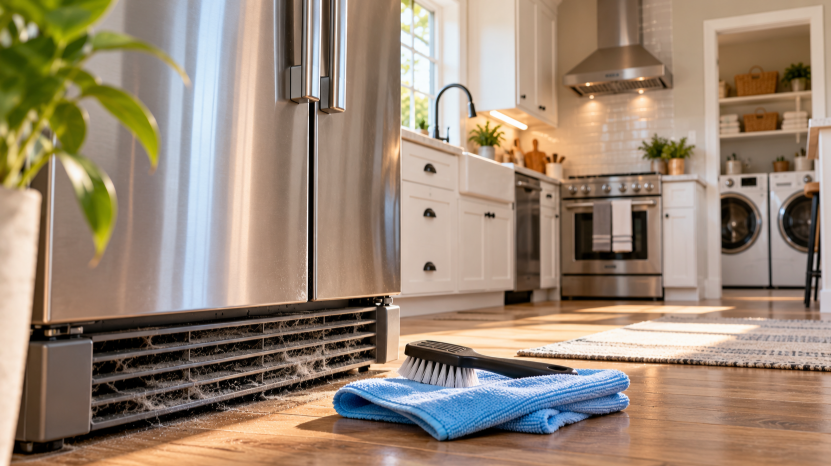
Your refrigerator works continuously to keep food fresh, but dust and pet hair can accumulate around its ventilation openings and accessible condenser coils.
On certain refrigerator models, this buildup may interfere with heat transfer, making it harder for the appliance to operate efficiently.
ENERGY STAR recommends keeping condenser coils clean when applicable and following the manufacturer's instructions.
Signs Worth Checking
- Dust collecting around the lower ventilation grille.
- Pet hair accumulating beneath the refrigerator.
- Visible dirt on accessible condenser components.
What You Can Do
Check your refrigerator's manual to identify which areas require maintenance. Some models allow homeowners to remove dust using a soft brush or vacuum attachment.
Follow the manufacturer's instructions for disconnecting power before cleaning. Never open sealed compartments or disturb electrical components.
Not all refrigerators require routine condenser-coil cleaning, so always check the requirements for your specific model.
Key Takeaway: Keeping accessible ventilation areas clean can support proper refrigerator operation and help you identify maintenance needs early.
2. Dryer Lint Traps and Exhaust Vents
Cleaning your dryer's lint screen is important, but many homeowners forget about the exhaust ventilation system.
Lint can accumulate beyond the visible filter and gradually restrict airflow. This may increase drying times and create safety concerns.
According to the U.S. Fire Administration, failing to clean dryer lint filters and vents is an important contributing factor in clothes dryer fires.
Warning Signs
- Clothes take longer than usual to dry.
- Visible lint collects around ventilation openings.
- The exterior exhaust flap does not open properly.
- The dryer produces unusual heat or odors.
What You Can Do
Clean the lint screen according to the manufacturer's instructions, generally before or after every load.
Periodically inspect the accessible exterior exhaust opening for visible obstructions. If you suspect lint buildup inside the ductwork, arrange professional cleaning.
Never continue operating a dryer that shows signs of overheating or a potentially dangerous malfunction.
Also, avoid crushing or damaging the exhaust duct when moving the appliance.
Key Takeaway: Regular dryer maintenance supports proper airflow and can reduce preventable fire hazards.
3. Bathroom Exhaust Fan Covers
Bathroom exhaust fans help remove humid air produced by showers and baths. However, their covers can gradually collect dust and debris.
A heavily dust-covered grille may restrict airflow, making it harder for the fan to perform as intended.
The Environmental Protection Agency recommends controlling indoor moisture to help prevent mold growth.
Signs Worth Checking
- Visible dust covering the fan grille.
- Condensation that remains after showering.
- Persistent moisture or musty odors.
- Unusual noises during fan operation.
What You Can Do
Start by switching off the fan and inspecting the visible cover.
Use a soft cloth or vacuum attachment to remove accessible surface dust. If the cover is removable, follow the manufacturer's instructions before taking it off.
Avoid spraying water or cleaning solutions directly into the motor housing.
If the bathroom remains unusually humid despite normal fan operation, the problem may involve ventilation performance or another moisture source.
A qualified professional can evaluate issues that ordinary cleaning cannot resolve.
Key Takeaway: Cleaning accessible fan covers and maintaining proper ventilation can help manage bathroom moisture.
4. Faucet Aerators and Showerheads
Faucet aerators and showerheads can gradually accumulate mineral deposits and other residue.
Because the buildup often develops slowly, homeowners may not notice the problem until the water flow changes.
The Centers for Disease Control and Prevention recommends cleaning showerheads and faucet aerators when visible buildup appears.
Signs Worth Checking
- Uneven water flow.
- Water spraying in unexpected directions.
- White or chalky mineral deposits.
- Visible residue around showerhead openings.
What You Can Do
Inspect your faucets and showerheads periodically.
If you notice buildup, follow the manufacturer's recommended cleaning instructions. Some fixtures have removable components that can be cleaned separately.
Use products compatible with the fixture's material and finish, and avoid forcing components that are difficult to remove.
Never mix household cleaning chemicals, particularly bleach with other cleaning products.
If water flow remains unusually weak after appropriate maintenance, a plumbing problem may require professional attention.
Key Takeaway: Keeping accessible water fixtures clean can support normal water flow and help you identify maintenance problems.
5. Kitchen Range Hood Filters
Your kitchen range hood helps manage airborne grease, cooking moisture, and odors.
Over time, grease can accumulate on its filters, especially in households that frequently cook with oil.
Because these filters are usually located underneath the hood, they are easy to overlook during everyday kitchen cleaning.
Signs Worth Checking
- Visible grease on the filter surface.
- Sticky residue underneath the range hood.
- Persistent cooking odors.
- Reduced ventilation performance.
What You Can Do
Check the manufacturer's instructions to determine whether your range hood uses washable metal grease filters or replaceable filters.
Certain metal filters can be cleaned using an appropriate degreasing method, while many charcoal filters require replacement.
Avoid abrasive cleaning products that could damage the filter or its finish.
Before reinstalling a washable filter, ensure it is completely dry and correctly positioned.
The appropriate cleaning interval depends on how often you cook and the type of food preparation involved.
Key Takeaway: Regularly inspecting and maintaining range hood filters helps keep kitchen ventilation equipment in proper working condition.
6. Window Tracks, Frames, and Sills
Most people remember to clean their window glass but overlook the tracks and lower corners of the frames.
These areas can collect dust, insects, leaves, and moisture, particularly around frequently opened windows.
Over time, accumulated debris may interfere with window operation or conceal early signs of water problems.
Signs Worth Checking
- Dirt collecting in tracks and corners.
- Water remaining around the window frame.
- Damaged or worn weatherstripping.
- Persistent condensation or discoloration.
What You Can Do
Use a soft brush or vacuum attachment to remove loose debris from accessible tracks.
Wipe the surfaces with a suitable cleaning product and dry the area afterward.
Inspect the weatherstripping for visible damage, and avoid blocking factory-designed drainage openings.
If moisture repeatedly appears, investigate the cause rather than simply wiping it away.
The EPA emphasizes that controlling moisture is important for preventing mold-related problems.
Key Takeaway: Cleaning window tracks makes it easier to maintain smooth operation and notice potential moisture issues.
7. HVAC Return-Air Grilles and Filters
Heating and cooling systems circulate air throughout your home, and their return-air grilles can gradually collect household dust.
Although visible dust is common, neglected filters and blocked airflow openings may contribute to equipment performance problems.
The EPA explains that dust on return registers does not automatically mean that an entire air duct system needs professional cleaning.
Signs Worth Checking
- Visible dust around return-air grilles.
- Dirty or clogged HVAC filters.
- Furniture blocking airflow openings.
- Weak airflow from certain vents.
What You Can Do
Remove accessible surface dust using a suitable vacuum attachment or soft cloth.
Check HVAC filters regularly and replace them according to the manufacturer's recommendations.
Make sure furniture, curtains, and stored objects do not obstruct required airflow.
Avoid inserting tools deep into ducts or disturbing internal insulation and electrical components.
If airflow problems continue, consult a qualified HVAC technician.
Professional duct cleaning may be appropriate under certain circumstances, but it is not automatically necessary for every home.
Key Takeaway: Basic grille cleaning and proper filter maintenance are useful habits, but unnecessary duct-cleaning services may provide little benefit.
A Simple Home Cleaning Checklist
You don't need to clean every hidden area each week. Instead, create a practical maintenance routine based on your appliances, household activities, and manufacturer recommendations.
| Area | When to Check |
|---|---|
| Refrigerator coils and ventilation | As recommended by the manufacturer |
| Dryer lint screen | Generally before or after every load |
| Dryer exhaust system | Periodically and when warning signs appear |
| Bathroom fan cover | When visible dust accumulates |
| Faucet aerators and showerheads | When buildup appears |
| Range hood filters | Based on cooking frequency and the manual |
| Window tracks and sills | During routine or seasonal cleaning |
| HVAC grilles and filters | Regularly, according to system requirements |
When Should You Call a Professional?
Some cleaning tasks involve electrical components, difficult-to-access ventilation systems, or potentially hazardous conditions.
Seek qualified assistance if you discover damaged ductwork, persistent moisture, suspected significant mold problems, or appliances that are malfunctioning.
Never attempt unfamiliar electrical, gas, or mechanical repairs simply to complete a cleaning task.
Final Thoughts
A home can look perfectly clean while overlooked areas continue accumulating dust, lint, grease, and moisture.
Paying attention to these seven locations can help you maintain household equipment and recognize potential problems earlier.
Start with the areas most relevant to your home, follow manufacturer instructions, and build a realistic cleaning routine.
A well-maintained home begins with noticing the places that are easiest to forget.
Sources
- U.S. Environmental Protection Agency: A Brief Guide to Mold, Moisture and Your Home
- ENERGY STAR: Refrigerators and Energy Efficiency
- U.S. Fire Administration: Clothes Dryer Fire Safety
- CDC: Preventing Waterborne Germs at Home
- U.S. EPA: Should You Have the Air Ducts in Your Home Cleaned?
Editorial Note: This article provides general household maintenance information. Always follow appliance manufacturer instructions and consult qualified professionals when necessary.
Leave a Reply